IOTA 2011 Results

REPORT:
This year, despite the low sun-spots, we received 2315 logs (yet another record), some 632,000 qsos sufficient to enable us adjudicate 75% of all qsos. In addition, we have received photographs from 252 stations, and more than a 71% of the stations entered their location using google maps. Entrants also posted 9 YouTube videos.
We have integrated both the maps and photographs on the results page and we hope that they would provide a richer experience.

We also give you the opportunity to enter/edit your location on google maps and you can email any contest related photographs (1 per station) to the contest manager: iotacontest@rsgbcc.org

Many thanks for taking part in IOTA 2011. Certificates will be sent to leading scorers in each category and a list of trophy winners will be published in due course. Trophies will be awarded at the RSGB Convention in October 2012. Those not able to attend will receive their trophy by mail after the Convention.

APPEALS:
Should you have any queries/disagreements about our adjudication please let us know IMMEDIATELY. The results will be finalised by 10 February 2012.

RESULTS PAGE:
http://iotacontest.com/contest/iota/2011/finalScore.php

PHOTO GALLERY:
http://www.iotacontest.com/contest/iota/2011/gallery.php

Official IOTA contest page:
http://www.iotacontest.com

Talk – Geoff G3TPQ, Receiver Technology

This week, Geoff G3TPQ, takes us through receiver technology from the first part of the 20th Century – perhaps the most important and progressive period of radio history to date. He’ll cover early spark based communications, and the first steps in electronics. Geoff will then look at the receiver technology available at the time, such as crystal sets and the various methods of amplification used in early 1920′s wireless sets. Geoff will also show us early horn type loudspeakers which allowed several people to listen to the “wireless” at the same time.

So, if you enjoy technology history, why not join us for a look back at this fascinating era when “wireless” became “radio”.

Club opens at 7:00 pm, with the talk starting at 8:00.

Members and all visitors welcome.

3B7C – DXpedition to St. Brandon Island

This week, we will be showing a DVD presentation produced by the Five Star DX Association and perhaps it should be entitled DX from
Paradise..

So why not get away from the dark, English winter and join us to look back to 2007 and see how to set up a serious DX station on a remote paradise island which is also a rare DXCC entity. The St Brandon Island station, 3B7C, was very successful, achieved 137,500 QSOs, 33,760 unique calls in the log, which broke all records.

Cargados Carajos Shoals (also known as the Saint Brandon Rocks) are a group of about 16 small islands and islets on an extended reef in the Indian Ocean northeast of Mauritius. The islands have a total land area of 1.3 km². The reef measures more than 50 km from north to south, and is 5 km wide, cut by three passes. The reef area is 190 km². The islands have a small population, made up of natives as well as others, and are rich in flora and fauna. The islands are classified as a dependency of Mauritius, which is more than 300 km south, and are administered from Port Louis. The islands are part of the Mascarene Islands. St Brandon is approached only by sea, and is some 240 nautical miles from Port Louis, Mauritius.

What’s is like to set up antennas on a far off paradise beach and have the world wanting to work you? join us this Thursday and find out?

On the Air on the first night at Pine Trees

We had an excellent turn out for our first night at Pine Trees with over twenty members and visitors in attendance. It was also good to see our new intermediate licencees, Mark (ex-M6MEA) now 2E0ZPT and Jonathan (ex-M6HBS) now 2E0CTW, and Charles 2E0IMM.

Although our room is slightly smaller than the one in our previous venue, this brand spanking new building complex boasts an excellent, well lit car park with plenty of free space. The room we use is on the first floor which also has its own balcony, giving us a good take-off to the south and east.

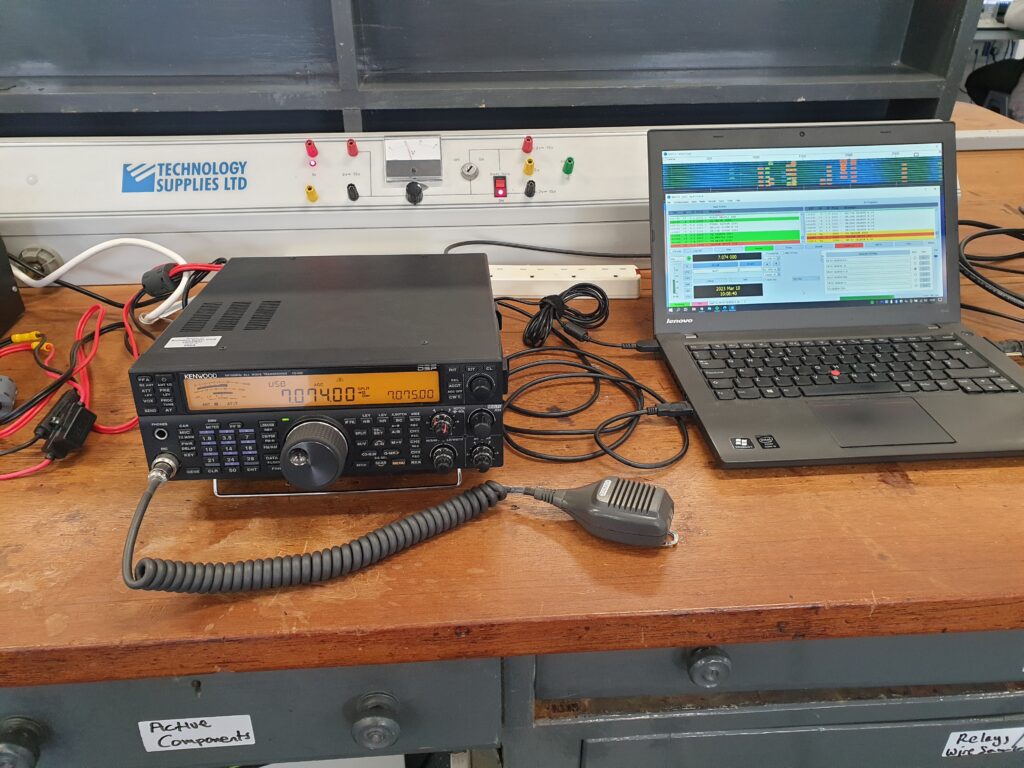
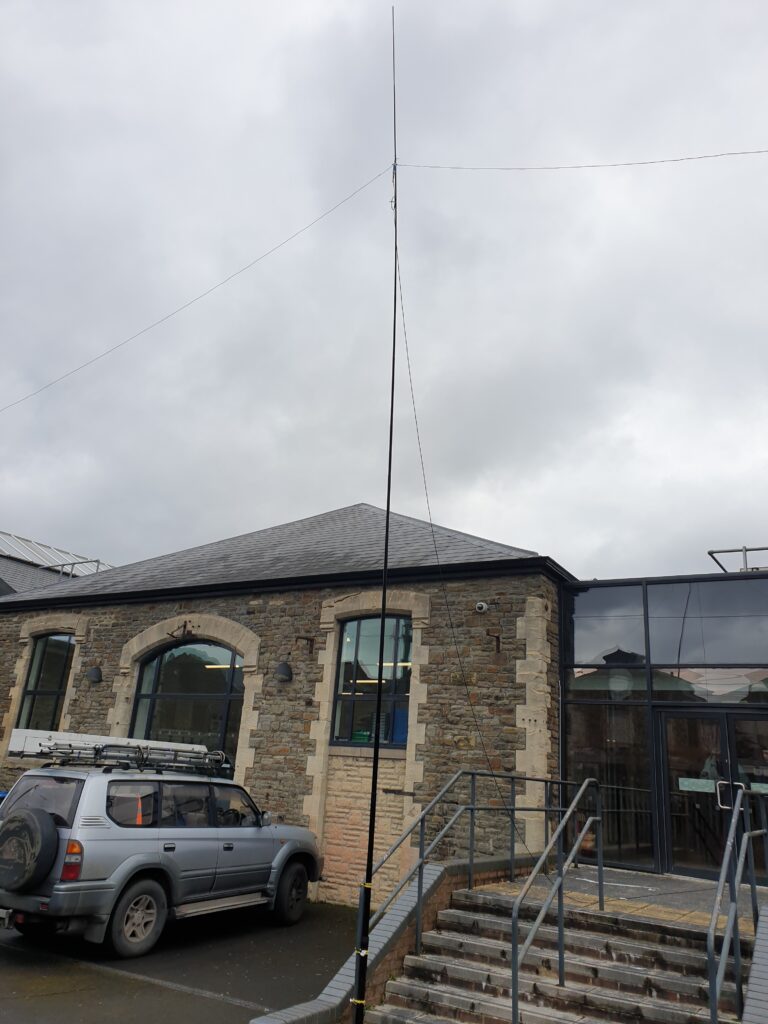
Eager to explore the scope for balcony antennas, Rob, M0GKG, Kev G6FOP, Steve M0SPN and Phil M0PBZ managed to hastily erect an 8m fishing pole vertical. Although this was far from optimal, after some interfacing and configuration challenges with a MAC (pretending to be a PC) and our Kenwood TS590S, we managed to get on-air on 40m and worked several QSOs into eastern Europe using PSK31.

James, supplied everyone with a plentiful supply of nice cakes made by Mr.Kipling (I don’t know his callsign) and coffee was available too. Yes, we do have access to a kitchen.

Next week we will be giving our new projector an outing with a DVD presentation about the Five Star DX Association 2007 trip to St. Brandon Island, using the callsign 3B7C. Indeed some of you may have worked them.

Look forward to seeing you in the coming year.

Phil, M0PBZ

20120106-104600.jpg

20120106-104612.jpg

New Venue

Tonight is the first meeting of the year and will be at the new venue. The address is:

Pinetrees Community Centre
The Circle
Swindon
SN2 1RF

AMSAT-UK Launch

AMSAT-UK has confirmed they have a launch organised for FUNCUBE and expecting for the bird to fly in September 2012. More details soon.

Last night at Savernake Street

This Thursday (22nd) will be the last time we meet in the Savernake Street premises.

Pine Trees

From the new year we will be meeting in the Pine Trees Community Centre, Pinehurst which opens its doors to the public today at 2pm.  The £2m centre replaces the old one which was demolished in 2007 – now the site of the Swindon Academy on Beech Avenue.

Located on The Circle, at the heart of Pinehurst, the building will house a number of local amenities and facilities for the community such as Library, Internet Café, Citizen’s Advice Bureau office and a dental surgery.

As well as being is located on a main bus route into and out of Swindon, there is parking spaces for 30 cars. There are a number of rooms and spaces which are available to hire for the community and local groups such as ours.


View Larger Map

Amateur Radio Balloon Flight Crosses Atlantic, Sets Records

Source: ARRL

Ron Meadows, K6RPT, and his son Lee — leaders of the California Near Space Project — successfully launched an Amateur Radio high altitude balloon on Sunday, December 11 at 4:43 PM PST. The balloon reached a cruise altitude between 105,000 and 115,000 feet, where it continued its travel across the United States, the Atlantic Ocean and Spain and into the Mediterranean Sea. For most of its trip, the balloon traveled at about 150 miles per hour and eventually covered 6236 great circle miles in just 57 hours 2 minutes. According to the CNSP, this is a new Amateur Radio balloon flight record for both distance and duration.

The balloon, which bore the call sign K6RPT-11 and could be tracked via APRS, traveled through California, Nevada, Utah, Colorado, Kansas, Missouri, Illinois, Indiana, Ohio, Pennsylvania, Maryland, Delaware and New Jersey. “When the balloon left the New Jersey shore behind, it was received by coastal stations as far away as Nova Scotia,” explained CNSP Team Member Don Ferguson, KD6IRE. “When it exceeded the range of these stations, we lost track of it and feared that we would not hear from the balloon again.”

Ferguson told the ARRL that when they woke up the next morning, the CNSP Team learned that K6RPT-11 was still in the air and transmitting. CU2ARA — the club station of the Amateur Radio Association of the Azores, located on the island of St Miguel — reported that they had successfully copied K6RPT-11’s signal. That morning, the balloon reached a height of 111,503 feet and was traveling in excess of 160 miles per hour, headed east at 92 degrees. “The rest of the day on Tuesday was exciting, as more stations around the world took note of the little balloon form Silicon Valley that was heading for the European mainland,” Ferguson said.

“The APRS system of digital radio repeaters maintained reception of the data traffic from the balloon transmitter, which transmitted its location from the onboard GPS,” Ferguson noted. “In the US, this network is established on 144.39 MHz, but is on a different frequency in Europe. Radio amateurs across the world were able to quickly adjust the European receivers to the balloon’s frequency and provided continued tracking worldwide. This is yet another example of the response and flexibility of ham radio operators to meet a sudden challenge and provide communications when needed.”

According to the CNSP’s Twitter feed, the balloon burst on Wednesday, December 14 at 0946 UTC, off the coast of Algeria.

DX Shop – New Shop For VHF and Up

DX Shop LogoThe DX Shop Limited is an all-new internet website supplying high end equipment to the serious VHF and UHF Radio Amateur.

Run by Roger Banks GW4WND the website www.thedxshop.com, provides a wide range of equipment from SSPA and Valve Linear Amplifiers, LNA, data soundcards, aerials cables and connectors.

The DX Shop Limited are manufacturers and distributors of the PowAbeam range of G4CQM VHF/UHF Antennas.

The DX Shop are also authorised distributors for Andrew HELIAX cables and connectors. We have offers on at the moment on AVA5-50 and offer a free termination service so cables can be bought ready made-up.

Ecoflex and Airflex low loss cables are also available as well as a full range of connectors and adapters to suit.

The DX Shop Limited stocks the RFHamdesign range of heavy duty Azimuth and Alt/Az rotators and accessories.

If you are serious about your hobby then pay the website a visit.

Competitive pricing and quick turnaround.

www.thedxshop.com
01588 620126

Chairman’s Challenge 2012 – Up Up and Away

High Altitude BalloonLast night at the Christmas dinner during the chairman’s speech it was announced that he was starting a new tradition for the club called the “Chairman’s Challenge” which will be announced during every Christmas dinner. The challenge is designed to encourage activity between members and focus on a goal for the coming year. Lets hope the tradition continues when the chairman role changes hands.

The challenge James, M1DST set for 2012 is: “Launch a high altitude meteorological balloon, reach inner space (approx 100,000ft), track it and then recover it. The payload must contain at least one camera but can contain as many cameras, experiments as it is deemed reasonable.”

A typical flight uses a standard latex weather balloon, lasts around 2-3 hours, and reaches 25 to 35 km in altitude.

There will be a talk by M1DST during the early part of 2012 to explain the project further. There are many world records in this area to be broken too!

This site is maintained by M1DST - Email: host@sdarc.net

Please remember that we now meet at the Pine Trees Community Centre, Pinehurst Circle, Swindon, SN2 1RF!